
InvigoratEU Rethinking Social Cohesion in EU Accession Countries: Lessons from Western Balkans and Eastern Neighbourhood

Razumkov Centre has joined the international project "InvigoratEU: Invigorating Enlargement and Neighbourhood Policy for a Resilient Europe". The project is being implemented by a consortium of research institutions — members of the Trans European Policy Studies Association (TEPSA) and funded by the European Union.

Among the authors of the policy report "Rethinking Spcial Cohesion in EU Accession Countries" is Leading Expert of theSocial and Gender Programmes of the Razumkov Centre, Olha Pyshchulina.

Executive summary: The present Policy Report analyses the nature and dynamics of social cohesion in the candidate countries of the Eastern Neighbourhood (Georgia, Moldova, Ukraine) and Western Balkans (Montenegro, North Macedonia, Serbia) and identifies to what extent the EU accession process has impacted it. As there have been no systematic, comparative or in-depth studies of social cohesion conducted covering these countries, our knowledge of its regional peculiarities is rather scarce. Addressing this gap, the Report presents the first attempt of conducting an in-depth comparative analysis of the nature and dynamic of social cohesion in the candidate countries of the Eastern Neighbourhood (EN) and Western Balkans (WB), specifically in the context of the EU accession process.

Disclaimer: Views and opinions expressed are however those of the author(s) only and do not necessarily reflect those of the European Union or the European Research Executive Agency. Neither the European Union nor the granting authority can be held responsible for them.


InvigoratEU Strengthening Critical Infrastructure Resilience in an Era of Hybrid Threats: Challenges, Lessons, and Policy Options for the EU and its Neighbourhood

Razumkov Centre has joined the international project "InvigoratEU: Invigorating Enlargement and Neighbourhood Policy for a Resilient Europe". The project is being implemented by a consortium of research institutions — members of the Trans European Policy Studies Association (TEPSA) and funded by the European Union.

Among the authors of the policy brief  "Strengthening Critical Infastructure Resilience in the Era of Hybrid Threats" is Leading Expert of the Energy Programmes of the Razumkov Centre, Svitlana Chekunova.

Executive summary: Europe’s critical infrastructure (CI) is facing an increasingly hostile threat environment from a variety of different actors. Russian hybrid operations, sabotage against energy and communications systems, and the vulnerabilities in increasingly interconnected systems highlight the importance of the topic. Recent attacks on European CI such as attacks on undersea cables in the Baltic Sea or incidents such as drone incursions into EU and NATO airspace highlight that protection as an inherent goal is unachievable. Instead, the goal should be to create resilient systems that can absorb and recover from disruptions.

The policy brief identifies two main clusters of challenges and key lessons. It also highlights that CI resilience is a EU-level issue. Resilience continues to be a shared vulnerability and a shared opportunity at the same time. 11 different recommendations are presented to different actors. Some of the priorities include harmonising incident reporting across directives; expanding EU-NATO cooperation; supporting candidate countries through technical assistance and capacity building; developing regional early-warning mechanisms; and promoting cross-border risk assessments and joint preparedness exercises.

Disclaimer: Views and opinions expressed are however those of the author(s) only and do not necessarily reflect those of the European Union or the European Research Executive Agency. Neither the European Union nor the granting authority can be held responsible for them.


InvigoratEU Democracy-Support Innovations in the Eastern Neighbourhood

Razumkov Centre has joined the international project "InvigoratEU: Invigorating Enlargement and Neighbourhood Policy for a Resilient Europe". The project is being implemented by a consortium of research institutions — members of the Trans European Policy Studies Association (TEPSA) and funded by the European Union.

Among the authors of the publication "Democracy-Support Innovations in the Eastern Neighbourhood" is Co-Director  of the Foreign Relations and International Security Programmes of the Razumkov Centre, Mykhailo Pashkov.

Executive summary: This comparative analysis concludes the InvigoratEU work package  by synthesising findings from Georgia, Moldova, and Ukraine through one of the project task's  multi-level framework, which conceptualises democratisation as the interplay of international (e.g., EU conditionality), regional (e.g., Russian hybrid threats), state (e.g., institutional reforms), and societal (e.g., civil society agency) factors in conflict and post-conflict contexts. Moving beyond traditional transition models, the study identifies three distinct patterns of democratic resilience in the Eastern Neighbourhood—securitised hollowing (Georgia), hybrid consolidation (Moldova), and wartime hybridisation (Ukraine)—thus fulfilling one of the project Objective by offering innovative perspectives on democratisation amid blockages to democracy, stability, and resilience. Drawing on these models and empirical lessons, the recommendations  (one of the project's task) translate into practical guidance for EU policymakers, promoting adaptive resilience while balancing securitisation measures with safeguards for pluralism.

Disclaimer: Views and opinions expressed are however those of the author(s) only and do not necessarily reflect those of the European Union or the European Research Executive Agency. Neither the European Union nor the granting authority can be held responsible for them.


InvigoratEU Long Policy Report on a Common Framework for the Protection of Critical Infrastructure in the EU and its Neighbourhood

Razumkov Centre has joined the international project "InvigoratEU: Invigorating Enlargement and Neighbourhood Policy for a Resilient Europe". The project is being implemented by a consortium of research institutions — members of the Trans European Policy Studies Association (TEPSA) and funded by the European Union.

Among the authors of the publication "Long Policy Report on a common framework for the protection of critial infrastructure in the EU and its neighbourhood" is Leading Expert of the Energy Programmes of the Razumkov Centre, Svitlana Chekunova.

Executive summary:  The report provides detailed analysis of the evolution and exiting policies of the EU in the field of the critical infrastructure (CI) protection and resilience as well as structured assessment of how CI related policies are adopted and implemented in selected EU Member States and candidate countries. To structure the comparative analysis of the national policies and institutions it proposes an analytical framework based on the policy implementation and compliance with EU norms literature focusing on the threat landscape, policy and institutional context as well as incentives and capacities for implementing CI related policies. This allows to provide an assessment of the current state of CI related policies in three selected EU Member States and three candidate countries which is based on original material collected for the purpose of this report, including primary and secondary sources. The conclusions and recommendations section elaborates on the differences and similarities of national CI related policies as well as challenges and opportunities for their alignment taking into the functional needs originating from existing interdependencies as well as specificities of national contexts. They also illustrate the ways and means of further contributions of the EU, in particular, the European Commission in advancing the goals of CI related policies and their alignment in the enlarging EU and its neighbourhood.

Disclaimer: Views and opinions expressed are however those of the author(s) only and do not necessarily reflect those of the European Union or the European Research Executive Agency. Neither the European Union nor the granting authority can be held responsible for them.


InvigoratEU Policy Paper on Demands for European Security and Defence Cooperation in Ukraine after Russia's Invasion

Razumkov Centre has joined the international project "InvigoratEU: Invigorating Enlargement and Neighbourhood Policy for a Resilient Europe". The project is being implemented by a consortium of research institutions — members of the Trans European Policy Studies Association (TEPSA) and funded by the European Union.

The publication contains the results of the survey which was conducted by the Sociological Service of the Razumkov Centre on February 28 - March 6, 2025

Executive summary: The European security outlook, and European support for Ukraine in particular, has changed dramatically. The EU is Ukraine’s key ally, a fact that Ukrainians fully appreciate. The full-scale war has created momentum for previously impossible forms of assistance and cooperation. In the first days of the full-scale war, EU member states considered sending only helmets to Ukraine, whereas in 2025, the military support sent by EU member states to Ukraine is worth 60 billion euros, including advanced and lethal weapon systems, as well as supplies ranging from ammunition to missiles and fighter jets. The most recent plans for security guarantees for a post-ceasefire Ukraine, including air policing, maritime operations, and a reassurance force building capacities for Ukraine’s land forces, demonstrate the cumulative change in the willingness of European states to respond to Ukraine’s security needs.

Disclaimer: Views and opinions expressed are however those of the author(s) only and do not necessarily reflect those of the European Union or the European Research Executive Agency. Neither the European Union nor the granting authority can be held responsible for them.


InvigoratEU Long Policy Report on rules alignment of protecting critical infrastructure in interdependent states

Razumkov Centre has joined the international project "InvigoratEU: Invigorating Enlargement and Neighbourhood Policy for a Resilient Europe". The project is being implemented by a consortium of research institutions — members of the Trans European Policy Studies Association (TEPSA) and funded by the European Union.

Among the authors of the publication "Long Policy Report on rules alignment of protecting critical infrastructure in interdependent states" is Leading Expert of the Energy Programmes of the Razumkov Centre, Svitlana Chekunova.

Executive summary The report provides an extensive discussion of evolving landscape of threats to the Cl in the EU and selected candidate countries in recent years and the challenges which, while varying depending on particular countries, also are common to all states affected by geopolitical tensions. The analysis of threats to energy, communications, transport and other Cl in the Baltic States, Ukraine and the Baltic Sea region shows that hostile activities by authoritarian states, in particular, Russia, or actors linked to them have become increasingly frequent. Their proliferation especially intensified after Russia's full-scale war against Ukraine in 2022, as it also became a wider confrontation between the West and authoritarian powers. The analysis of Cl-related policies in Montenegro, Ukraine and Georgia - three candidate countries, which differ in terms of their state of accession into the EU, their connectivity patterns and risks to their Cl associated with them - allows to assess different challenges arising to their Cl and provision of vital services to society and state and methods of coping with them in each of them. The report concludes with recommendations emphasising the importance of daily practices of partnership and exercises involving all stake holders of Cl ecosystems and cooperation with the EU and NATO partners, taking into account different patterns of interdependencies and existing threats. 

Disclaimer: Views and opinions expressed are however those of the author(s) only and do not necessarily reflect those of the European Union or the European Research Executive Agency. Neither the European Union nor the granting authority can be held responsible for them.


Private Healthcare: Development Prospects In Ukraine

Existing knowledge of the private healthcare system in Ukraine is small and fragmented. In fact, it is limited to data on the number of private healthcare organisations, their capacity (beds and visits per shift), number of employees and some marketing research on the market for paid health services. The economy of private health institutions, their social positioning and interaction with the public health sector were rarely subject to analysis.


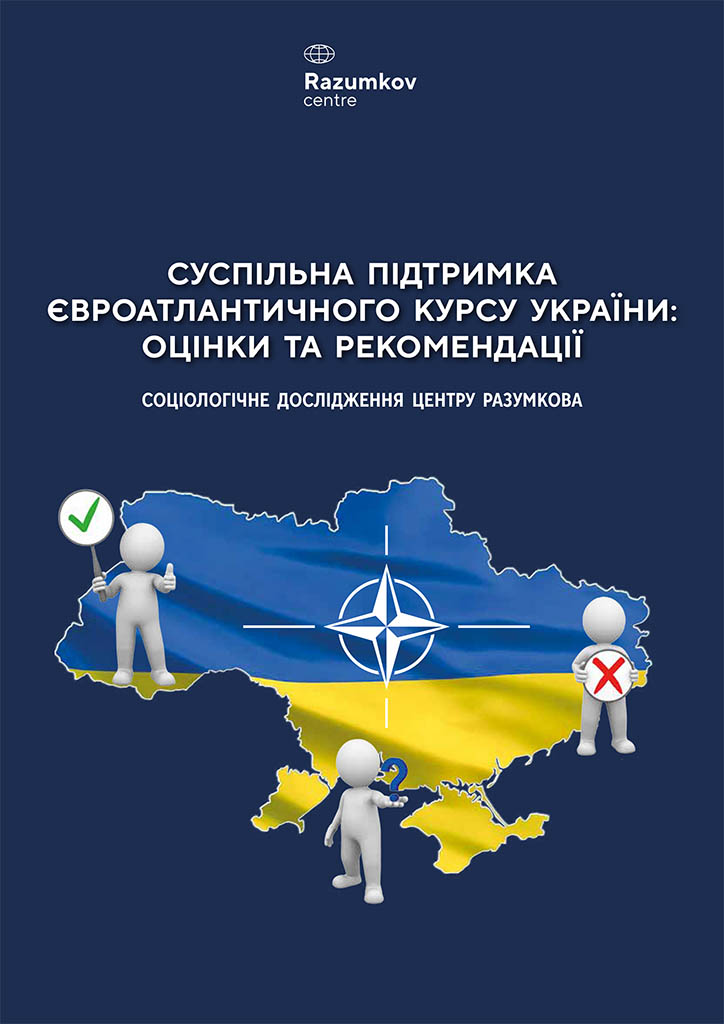
Суспільна підтримка євроатлантичного курсу України: оцінки та рекомендації


Assessment of Public Support for Ukraine’s Euro-Atlantic Integration and Policy Recommendations


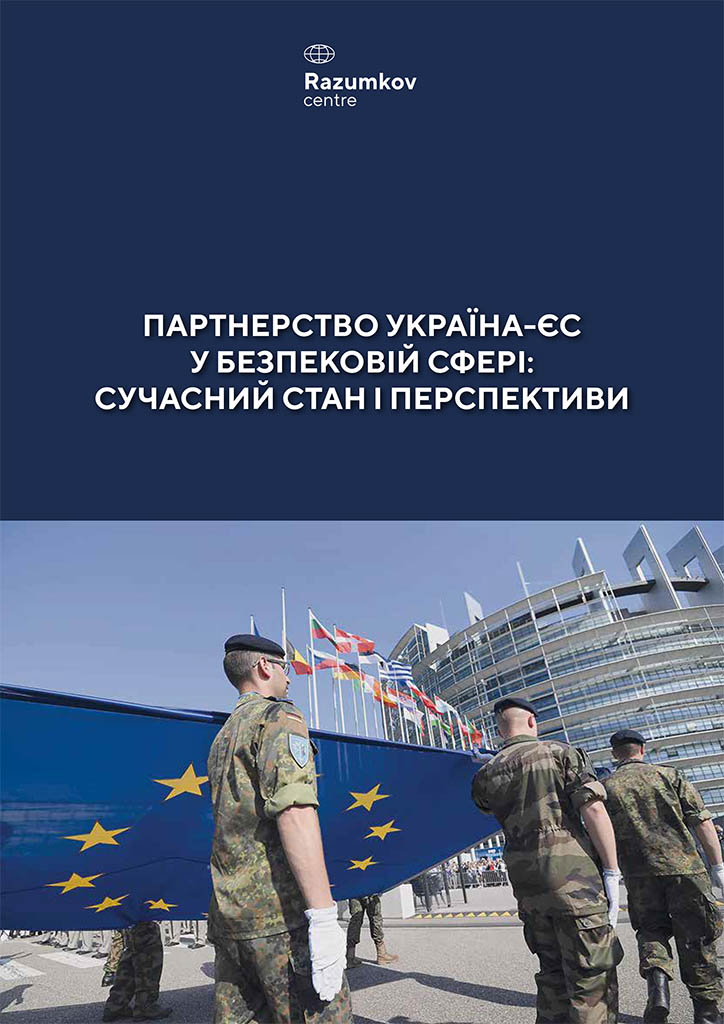
Партнерство Україна-ЄС у безпековій сфері: стан і перспективи


The EU-Ukraine Security Partnership: Status and Prospects


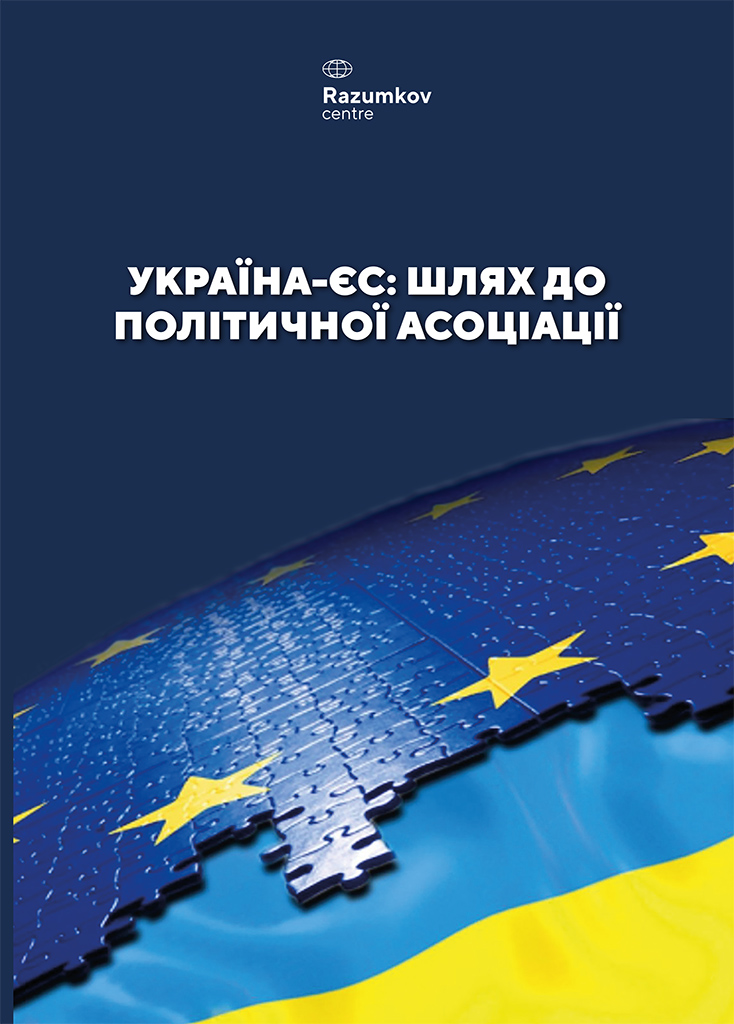
Ukraine-EU: Path to Political Association


Україна-ЄС: шлях до політичної асоціації

Проект Центру Разумкова «Україна-ЄС: шлях до політичної асоціації» здійснено за підтримки Представництва Фонду К. Аденауера в Україні. Проект містить аналітичну доповідь, присвячену еволюції, особливостям і перспективам політичних відносин Україна-ЄС. У доповіді досліджується ефективність інституційного забезпечення відносин Києва і Брюсселю, визначаються виклики і загрози євроінтеграції, зосереджується увага на найбільш актуальних для України питаннях – безпека і здійснення внутрішніх реформ. Також окреслюється роль і місце України у системі зовнішньої політики ЄС, розглядаються правові засади і перспективи політичної асоціації.

На основі проведеного аналізу підготовано комплекс експертних пропозицій, рекомендацій і ініціатив законодавчо-правового і організаційного характеру, спрямованих на підвищення якості політичного партнерства Києва і Брюсселя і забезпечення умов для приєднання України до ЄС.

У рамках проекту проведено заочний круглий стіл за участі урядовців і незалежних експертів, присвячений проблемам і перспективам євроінтеграції України.

Також важливою складовою цього проектного дослідження є результати експертного і загальнонаціонального соціологічних опитувань. Громадяни і фахівці з міжнародних питань оцінювати темпи і особливості просування України на шляху євроінтеграції, визначали проблемні аспекти. Зокрема, експерти характеризували стан досягнення цілей Угоди про асоціацію Україна-ЄС, окреслювали специфіку політичного діалогу, наголошували на необхідності оновлення Угоди про асоціацію, насамперед її політичної частини. Слід констатувати, що в українському суспільстві і експертному середовищі спостерігається стабільно високий рівень підтримки європейського курсу України, ідеї приєднання до ЄС.

Своєю чергою, тематика проекту розглядається в ряді авторських статей, присвячених проблемам і особливостям політичного діалогу України і ЄС.

Енергетика України виклики та ініціативи

Головною метою пропонованої роботи є розробка механізмів своєчасної мінімізації загрозливих негативних факторів, що згодом перетворить енергетичний комплекс України на “стартовий майданчик” динамічного економічного розвитку держави. У аналітичній роботі визначаються не лише базові антикризові заходи, але й окреслюються стратегічні підходи реформування.

У пропонованому дослідженні розглядаються кілька сценаріїв розвитку подій для того, аби запобігти падінню у короткостроковому періоді та діяти на випередження, не змінюючи стратегічного курсу в перспективі.

Тому в цій роботі ми оцінили поточний стан вітчизняної енергетики, як кожного сектору окремо, так і сфери загалом, та запропонували механізми вирішення проблемних питань галузі.

Конституція і конституційні зміни в Україні

Збірник, присвячений пам’яті Віктора МУСІЯКИ

Збірник присвячено пам’яті відомого українського вченого-правознавця, державного та громадсько-політичного діяча В.Мусіяки (1946-2019рр.). Видання містить наукові статті з актуальних проблем сучасного конституційного розвитку України, стану Основного Закону держави та перспектив внесення змін до нього, захисту прав людини, розвитку основних конституційно-правових інститутів. Окрему увагу присвячено постаті В.Мусіяки, його науковій та суспільно-політичній діяльності.

Для науковців, експертів, фахівців у сфері конституційного права, студентів та всіх, хто цікавиться проблемами сучасного конституційного розвитку України.
The publication is dedicated to Mr. Viktor Musiyaka (1946-2019), a famous Ukrainian legal scholar, public and political figure. The publication includes research papers on topical issues of modern constitutional development of Ukraine, condition of the Basic Law of the State and prospects for its amendments, protec- tion of human rights and development of basic constitutional and legal institutions. Special attention is paid to the personality of Mr. Viktor Musiyaka, his scientific, political and public activities.

It is published for researchers, experts, specialists in the field of the constitutional rights, students and wider public interested in modern constitutional development in Ukraine.


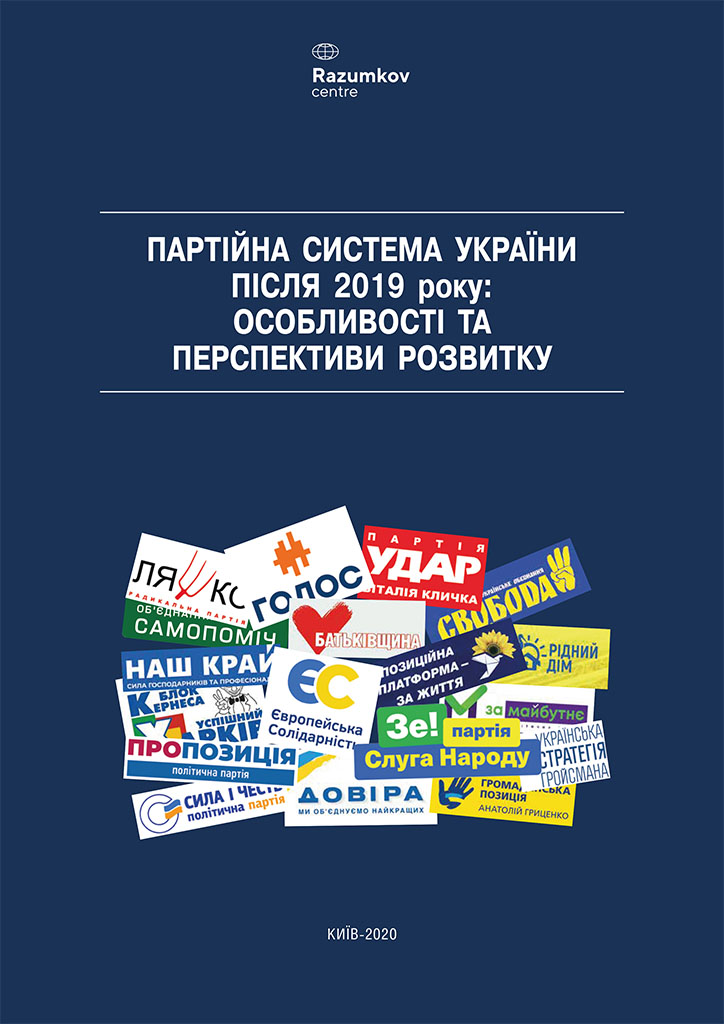
Партійна система України після 2019 року: особливості та перспективи розвитку

Проект “Партійна система України після 2019 року: ключові особливості та перспективи подальшого розвитку” здійснено за сприяння Представництва Фонду Конрада Аденауера в Україні

    1. Партійна система і суспільно-політичний ландшафт України напередодні парламентських виборів-2019
    2. Особливості і тенденції розвитку партійної системи України, що сформувалася після виборів 2019р.
    3. Локальний вимір міжпартійної конкуренції: за підсумками чергових місцевих виборів
    4. Висновки та рекомендації

Національна безпека і оборона

Зовнішня політика

Внутрішня і правова політика

Економіка

Енергетика

Соціальна сфера

Гуманітарна політика


2019

Збірник аналітичних матеріалів "Конфлікт між Москвою і Києвом: вікно для нових можливостей, збереження status quo чи новий виток ескалації"

Підготовлений Центром Разумкова за підтримки Представництва Фонду Аденауера в Україні. В цьому виданні представлені позиції і прогнози німецьких, українських і російських експертів щодо перспектив конфлікту Москви і Києва в контексті зміни влади в Україні. Становлять інтерес пропозиції з мінімізації російсько-українського протистояння, зниженню напруги на Донбасі. Також у виданні опубліковані деякі результати соціологічних досліджень Центру Разумкова за період 2014-2019рр.
Збірник було презентовано 19 серпня 2019р. в Італії (Каденаббія) на черговій Х зустрічі українських, російських і німецьких експертів


Соціально-економічний вимір України в період зміни політичних еліт

Передмова
Суперечливі, і суттєво нижчі очікуваних, соціально-економічні результати останніх років, отримані на тлі глибокого розчарування у владі, яка прийшла на хвилі високої довіри громадян країни, не лише посилюють нігілістичне сприйняття вітчизняного сьогодення, але й створюють «гарну» основу для різноманітних популістських тез і гасел, безвідповідальних заяв стосовно рецептів швидкого збагачення українців.
Виборчі марафони (спочатку президентський і відразу ж парламентський) упродовж семи місяців 2019р. гальмували можливості запровадження економічних перетворень і очікуваних змін. Переважна більшість соціально-економічних
процесів мала інерційний характер з попередніх років, що хоча й означало певне послаблення адміністративного і податкового тиску на бізнес, проте, водночас, розмивало базис системних трансформацій. Найголовнішою вадою стало
те, що влада була стурбована власним політичним майбутнім, не достатньо визначеними перспективами (після президентських і парламентських виборів), а тому й вкрай слабко опікувалась створенням і зміцненням передумов забезпечення економічної та інституційної стійкості країни.
Між тим, всупереч багатьом апокаліптичним сценаріям, ризикам і острахам розвалу соціально-економічного середовища країни і втрати цивілізаційних перспектив – Україні упродовж 2016р. - першій половині 2019р. вдалося
відновити, хоча й слабку, проте позитивну, економічну динаміку, забезпечити прискорене зростання заробітних плат, стабілізувати національну валюту, уникнути дефолту. І, хоча Україна й не вийшла на шлях стійкого (і стрімкого) зростання, не спромоглася безумовно зміцнити національну економіку і убезпечитися від кризових проявів, проте, зважаючи на зовнішні і внутрішні виклики, розвиток країни упродовж останніх років нема підстав оцінювати лише негативно.
Тому у цій публікації наголос зроблено на певному підбитті підсумків розвитку соціально-економічного середовища у першому півріччі, а також представлене бачення короткострокового прогнозу головних соціальних
і макроекономічних показників для 2019р.

А.Рачок,
Генеральний директор Разумков центру
29 липня 2019р.


Citizens of Ukraine About Themselves,  the Country and Its Future

Громадяни України про себе, країну та її майбутнє

  • Critical View of the Present, Hope for the Better, and Faith in the Future.
  • Patriotism, Respect for National Symbols, and Rethinking of History
  • The European and Euro-Atlantic Choice: Guarantee of Secure and Successful Future of Ukraine
  • Russia: Threats, Negative Impact, and Readiness to Resist


  • Критичний погляд у сьогодення, надія на краще, віра в майбутнє
  • Патріотизм, повага до символів держави, переосмислення історії
  • Європейський та євроатлантичний вибір – гарантія безпечного та успішного майбутнього України
  • Росія: загрози, негативний вплив, готовність до протидії

Дослідження "Україна-2019: в очікуванні обережного оптимізму"


Україна напередодні року виборів: в очікуванні обережного оптимізму
Макроекономічне середовище України у 2019р.


2018

Порівняльний аналіз позицій влади і громадян України з питань забезпечення безпеки громад під час децентралізації влади та реформування місцевого самоврядування 

М.Сунгуровський (керівник проекту) та ін.

Безпекові аспекти децентралізації влади в Україні розглядаються не вперше, але їх актуальність не зменшується. Перебіг децентралізації в Україні є неоднозначним. В окремих громадах втілюються лише фрагменти потрібної системи
громадського захисту (залежно від тематики донорських чи відомчих проектів – переважно утворюються протипожежні дружини). Інші громади зрозуміли необхідність більш комплексного підходу та пішли шляхом утворення центрів
безпеки, де розташовуватимуться служби пожежної охорони, поліції, швидка допомога, аварійно-рятувальні підрозділи.

Спірними питаннями залишаються сфери безпекових повноважень, які держава готова делегувати громадам (забезпечення правопорядку, територіальна самооборона), і рівень їх розмежування, – що, на думку державного керівництва,
може загрожувати втратою монополії на застосування сили. Немає однозначної думки з цього приводу і серед громадян України та експертного середовища, що вимагає додаткових обговорень цієї проблеми і пошуку нестандартних
підходів до її розв’язання.
Думки, висловлені в цьому виданні, не обов’язково відбивають позицію чи схвалюються грантодавцем.


Российско-украинский конфликт: перспективы и параметры миротворческой миссии ООН на Донбассе

Руководитель проекта – Михаил Пашков
Редакторы – Алла Чернова, Анна Пашкова, Валерия Клименко
Бильд-редактор – Андрей Хопта
Дизайн и макет – Александр Шаптала
В работе над изданием также принимали участие сотрудники Представительства
Фонда Конрада Аденауэра в Украине Екатерина Белоцерковец и Юрий Сильвестров.


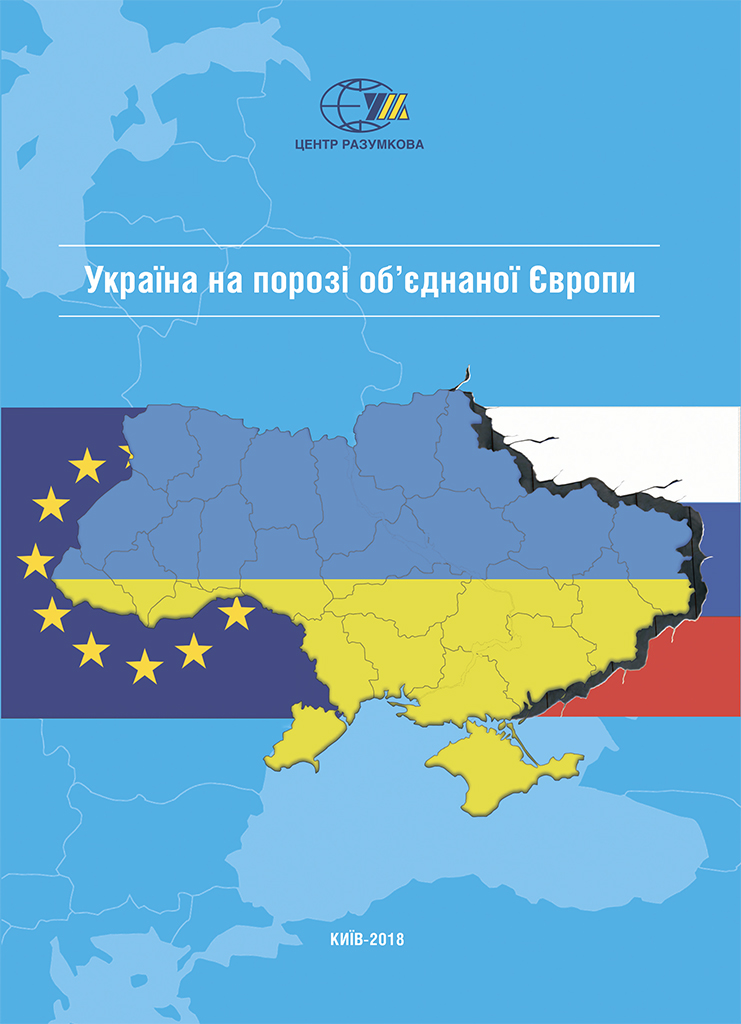
Україна на порозі об’єднаної Європи
Станіслав КУЛЬЧИЦЬКИЙ,
Михайло МІЩЕНКО

Монографія присвячена вивченню трансформаційних процесів в Україні після розпаду Радянського Союзу. Автори досліджують закономірності
тривалого і складного переходу від радянського минулого до сучасної демократичної Української держави, виявляють динаміку основних параметрів українського соціуму під час цього переходу, встановлюють “больові точки”, які досі заважають українському народу ввійти до структур об’єднаної Європи.
Видання здійснено в рамках проекту Центру Разумкова “Геополітичний вибір України 1991-2017рр.” за підтримки Представництва Фонду Ганса Зайделя в Україні.
Керівник проекту Ю.Якименко.


Energy strategy of Ukraine for the period up to 2035 “security, energy efficiency, competitiveness”


APPROVED by Resolution of the Cabinet of Ministers of Ukraine of 18 August, 2017 No. 605-p


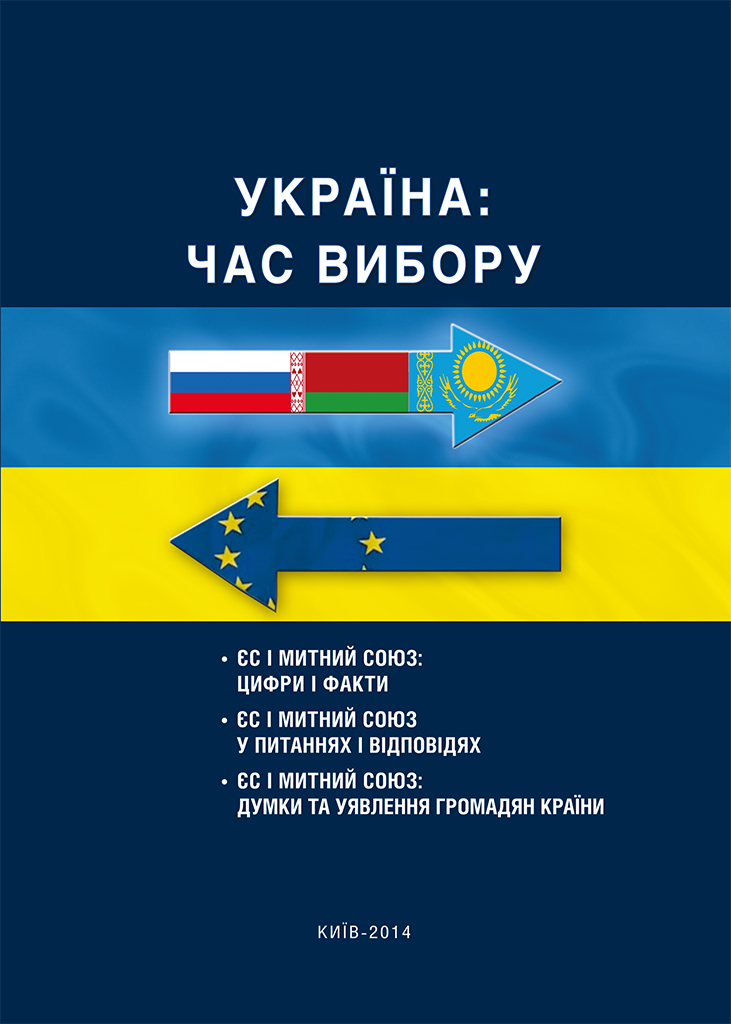
Україна: час вибору

 ПРОЕКТ ЗДІЙСНЕНО ЗА ПІДТРИМКИМІЖНАРОДНОГО ФОНДУ “ВІДРОДЖЕННЯ

 Брошура підготовлена експертами Центру Разумковав рамках проекту “Європейська інтеграція України:внутрішні фактори і зовнішні впливи”